

Leírás
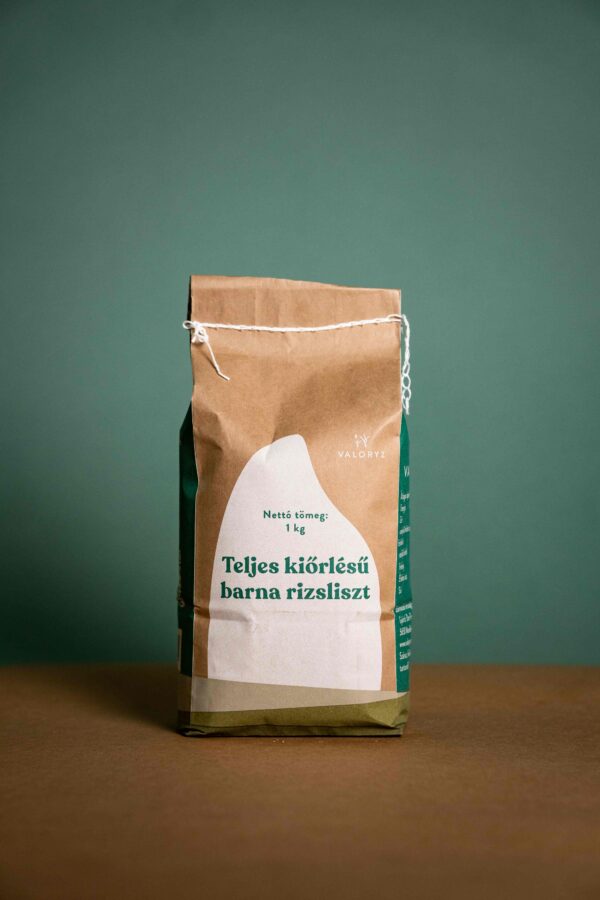
Brown rice flour 1 kg – wholegrain, Hungarian, gluten-free rice flour
A Valoryz brown rice flour Wholemeal, gluten-free flour ground from Hungarian brown rice. As the outer layer of the rice grain is retained during processing, the flour contains fibre, minerals and plant-based co-factors.
It has a more distinctive flavour and a denser texture than white rice flour. It can be used for pancakes, savoury flatbreads, mixed doughs, bread-like gluten-free recipes, breading, thickening and feeding gluten-free sourdough.
Wholemeal brown rice flour with fibre and minerals
Brown rice flour is made by milling the whole rice grain. The outer layer of the rice grain contains a significant proportion of the fibre, minerals and other plant compounds, which is why the composition of brown rice flour differs from that of the lighter, more neutral white rice flour.
Brown rice flour fibre, protein, magnesium, phosphorus, potassium, zinc, selenium, B vitamins and vitamin E contains. These ingredients are part of brown rice’s natural nutritional profile and are particularly important if you want to use more than just plain white flour for gluten-free baking.
- Fibre: It also contains dietary fibre derived from the outer layer of brown rice.
- Protein: adds natural rice protein to pasta and flour mixes.
- Magnesium and phosphorus: key components of the mineral content of brown rice.
- Zinc, potassium and selenium: the trace elements and minerals associated with whole grain rice.
- B vitamins: Brown rice may also contain vitamins B1, B2, B3 and B6.
- Vitamin E: a fat-soluble vitamin associated with the natural plant compounds found in brown rice.
Brown rice flour for gluten-free baking and cooking
Valoryz brown rice flour is ideal for use in gluten-free recipes where a more distinctive flavour and a thicker consistency are required than those provided by white rice flour. It can also be mixed with white rice flour, millet flour, buckwheat flour or other gluten-free flours.
It can be used for pancakes, flatbreads, savoury pastries, vegetable patties, mixed cakes and breading. When thickening, it can be added to vegetable stews, sauces and creamier dishes if you’d like a slightly more distinctive, brown rice-based flavour.
The difference between white rice flour and brown rice flour
A white rice flour It has a lighter, finer texture and a more neutral flavour. It is ideal for sponge cakes, pancakes, shortcrust pastry and smoother mixtures, as it alters the flavour and colour of the dish to a lesser extent.
A brown rice flour Wholemeal flour, which gives it a more distinctive flavour, a darker colour and a denser texture. The outer layer of the rice grain contains fibre, minerals and plant-based compounds, so brown rice flour is the best choice if the recipe can handle a more pronounced rice flavour.
It can also be used for feeding sourdough
Brown rice flour can also be used to feed gluten-free sourdough. Because it is more coarsely ground, it provides a more favourable nutrient environment for sourdough cultivation than highly refined, more neutral flours. For gluten-free sourdough, you can try using it on its own or in combination with other gluten-free flours.
When making sourdough, it is important to ensure that the utensils, storage containers and other ingredients used do not come into contact with flours containing gluten. Brown rice flour is gluten-free in itself, but care must be taken to avoid cross-contamination in the kitchen whenever baking gluten-free products.
Suggestions for use
Brown rice flour differs from wheat flour in terms of its water absorption and texture; therefore, when baking gluten-free, it is advisable to use it in combination with other flours and binding agents. When mixed with white rice flour, it produces softer dough; when mixed with millet flour, it produces dough with more character and a denser texture.
- For pancakes: When mixed with white rice flour, it gives a softer texture.
- For savoury flatbreads: It can be used for vegetable flatbreads and simple gluten-free basic recipes.
- For mixed doughs: It is suitable for fruit cakes, muffins and thicker batter mixtures.
- For breadcrumb coating: It can also be used in combination with other gluten-free flours or breadcrumbs.
- For compression: It can be added to vegetable dishes, sauces, gravies and creamier dishes.
- For gluten-free sourdough: It can also be used to feed sourdough.
Flour ground from Hungarian brown rice
Valoryz brown rice flour is made from Hungarian brown rice. The cultivation, processing and packaging of this domestic rice ensure greater traceability than is the case with a significant proportion of rice flours sourced from distant imports, which are less traceable.
What should you choose to go with it?
If you’re making a softer dough, a lighter sponge cake or a more neutral-tasting pancake, the white rice flour It complements brown rice flour well. Organic millet flour is also ideal for savoury flatbreads, doughs with a porridge-like consistency, and gluten-free recipes with a more distinctive flavour.
For sweet cakes and pancakes, the plain dried fruit They give a natural fruity flavour. For savoury flatbreads, vegetable dishes and cold dishes, the cold-pressed natural oils are suitable.
If you want to eat more fibre, the Apple fibre and the Apple Pectin with Inulin It can be used as a separate addition. For fillings, cakes and thicker doughs, the sparrows …are also well connected.
Product features
- Wholemeal rice flour ground from Hungarian brown rice.
- It is, of course, gluten-free.
- It also contains fibre and minerals derived from the outer layer of brown rice.
- It has a more distinctive flavour and a richer texture than white rice flour.
- It can be used for pancakes, flatbreads, mixed doughs, breading and thickening.
- It is also suitable for feeding gluten-free sourdough.
- It can be used on its own or mixed with other gluten-free flours.
Frequently asked questions
Is Valoryz brown rice flour gluten-free?
Yes, brown rice flour is, of course, gluten-free. It can be used for gluten-free baking, cooking, breading, thickening and feeding sourdough.
What is brown rice flour made from?
It is made from Hungarian brown rice, which has been whole-grain milled. The outer layer of the rice grain is retained, so it contains fibre, minerals and plant-based nutrients.
How is it different from white rice flour?
White rice flour is lighter in colour, has a more neutral flavour and a finer texture. Brown rice flour has a more distinctive flavour and a darker colour, and the outer layer of the rice grain contains fibre, minerals and plant-based compounds.
Can it be used to feed sourdough?
Yes, it can also be used to feed gluten-free sourdough. When making sourdough, you must ensure that the utensils and other ingredients do not come into contact with flour containing gluten.
Which recipes does it go best with?
It can be used for pancakes, savoury flatbreads, mixed doughs, vegetable patties, breading, thickening and gluten-free sourdough base recipes.
 Magyar
 Slovenčina
 Română
 Deutsch
 English (UK)
Reviews
There are no reviews yet.