




Leírás
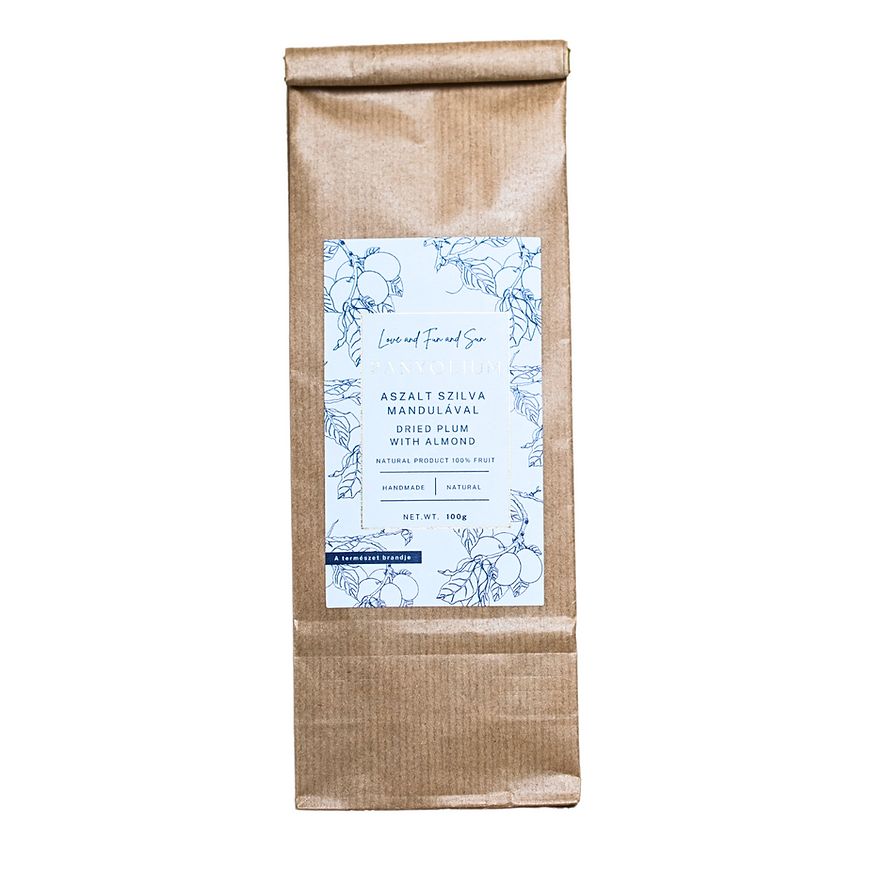
Dried plums stuffed with almonds from the Balaton Uplands – natural Hungarian dried fruit with no added sugar or sulphur dioxide
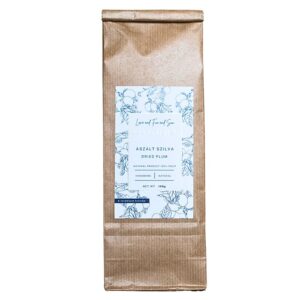
The dried plums from Panyolai filled with almonds from the Balaton Highlands a special natural drying salt based on Hungarian ingredients. The product combines the juicy, naturally sweet dried plums of Panyolai with the characterful almonds of the Balaton Highlands, no added sugar, sulphur dioxide, preservatives or artificial coatings.
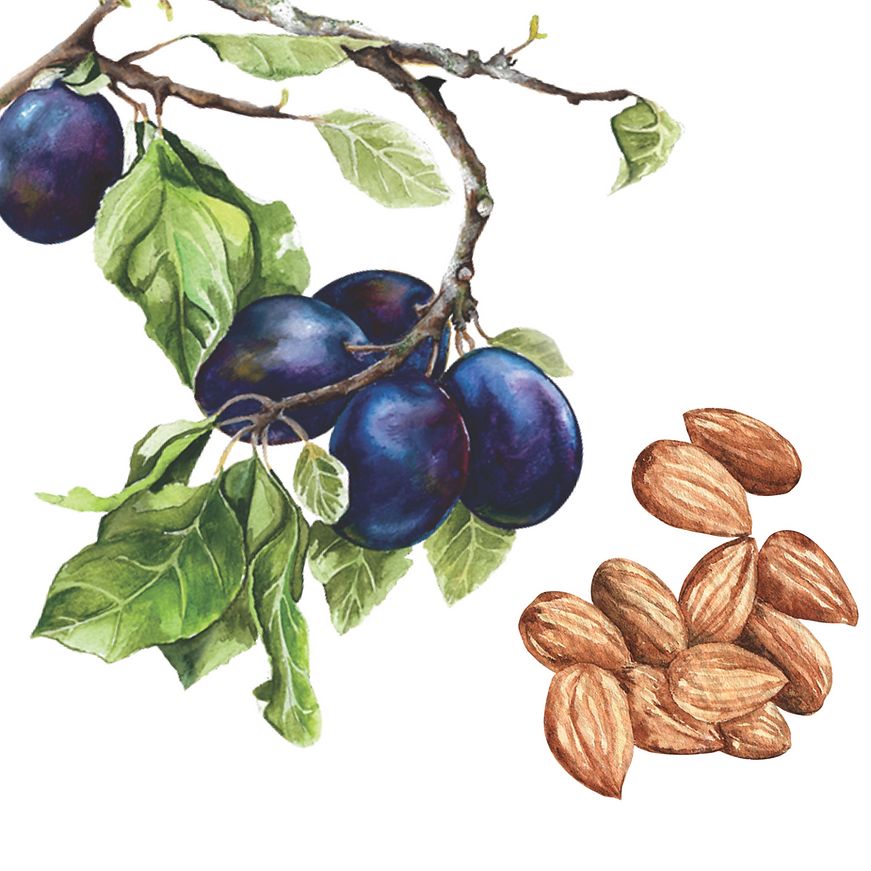
The carefully selected plum seeds are pitted, and then a single seed is placed in the Almonds from the Balaton Highlands Circumvention. It is then dried in a traditional wood-fired kiln. This is how this stuffed dried fruit is made, a speciality with a fruity, full flavour, natural sugar content and oil seeds.
Why are natural prunes valuable?
The prunes concentrated fruit form: a significant proportion of the water content is removed during drying, while the fruit's fibres, natural sugars, organic acids, minerals and plant accompanying substances remain in a more concentrated form. Therefore, even in small quantities, prunes give an intense flavour and nutrient-rich fruity character.
Plums naturally contain dietary fibre, including pectin and other fibre fractions, which are important dietary components for intestinal function and digestion. Prunes also contain natural sorbitol, which contributes to prunes' characteristic dietary role in digestion.
100 g of prunes per day contribute to normal intestinal function. The fibre, natural sorbitol and fruit acids combine to give prunes their well-known digestive-related nutritional value.
Natural dried fruit with no added sugar - unsweetened industrial fruit preparations
The essence of natural dried fruit is that the fruit retains its own natural flavour, fibre and character. This is a big difference compared to large-scale, sweetened dried fruit, where the fruit is often treated with sugar syrup, polished, softened or sweetened to produce a more uniform, sweeter and more attractive product.
A for dried grapes treated with sugar syrup or containing added sugar additional sugar may be added to the natural sugar content of the fruit. This adds unnecessary sweetness, can overpower the fruit's own flavour and makes the product more of a sugary confection than a simple, natural fruit-based food.
This is the dried plums stuffed with almonds in contrast contains no added sugar. The sweetness is provided by the natural sugar content of the plums, while the almonds add a fuller, oilier flavour and a more substantial bite.
Sulphur dioxide-free prunes - without sulphite treatment
Often used in large-scale drying sulphur dioxide or sulphites to preserve colour, slow browning and improve microbiological stability. Sulphur dioxide treatment can produce a more spectacular, lighter, more uniform colour of the ash but introduces an additive.
Sulphur dioxide and sulphites can cause unpleasant reactions in sensitive people, which is why many consumers consciously avoid sulphite dried fruit. A sulphur dioxide-free prunes provides a simpler composition and better preserves the originality of the natural dried fruit.
This product sulphur dioxide-free, which means that it is not the sulphur treatment that gives it its durability and appearance, but the careful selection of raw materials, the seeding, the stuffing with almonds and the traditional drying process.
Stuffed with almonds from the Balaton highlands
The almonds of the Balaton Highlands are not just a filling, but one of the main values of the product. Almonds naturally contain vegetable protein, fats, fibre and minerals. The taste is full-bodied, slightly sweet, with a creamy character typical of an oily kernel, which balances the fruity sweetness of prunes.
Plums and almonds together make a more substantial dessert than a simple sugared fruit snack. The natural sweetness of the fruit, the fibre content and the fatty acid and protein content of the almonds make it a more balanced, substantial snack.
Traditional preparation, Hungarian ingredients
The product is based on Hungarian plums from Panyolai and almonds from the Balaton highlands. The plum seeds are hand-picked and pitted, then filled with almonds. Wood-fired oven drying gives a more traditional, characterful flavour than accelerated, industrial drying.
The aim of the slower, more artisanal type of drying is not to achieve a completely uniform, artificially controlled appearance of the fruit, but to preserve the fruit's natural flavour, dense texture and true dried fruit character.
Natural dried fruit versus industrial dried fruit
There is a significant difference between natural dried fruit and industrial dried fruit treated with additives in terms of composition, flavour, quality of the raw material and processing method.
- Natural drying salt: the fruit is based on its own natural sugar content, without added sugar.
- Sweetened large-scale industrial drying: may be treated with sugar syrup or made with added sugar, which can overpower the natural flavour of the fruit.
- Desalination without sulphur dioxide: is made without sulphite treatment, with a simpler composition.
- Sulphur dioxide desalination: can give more spectacular colour and longer shelf life, but contains additives.
- Traditional drying: results in a more characteristic fruit flavour, a more natural texture and a less industrial product.
- Large-scale drying: is often optimised for uniform appearance, fast processing, cheaper production and long shelf life.
Organic and natural dried fruit - what's the difference?
Organic certification is a special advantage for dried fruit from controlled organic farming. In organic farming, stricter rules apply to pesticides, fertilisers, soil treatment and the entire production process.
In this range, natural processing is also an important quality aspect: without added sugar, sulphur dioxide and preservatives, the focus remains on the fruit's own flavour and natural character. For non-organic, large-scale fruit, intensive pesticide treatment, sugar syrup treatment, sulphur dioxide preservation or processing optimised for uniform appearance may be more common.
How to consume it?
The prunes stuffed with almonds is a substantial snack on its own, but also goes well with cheese platters, festive offerings, seeded assortments and gift packs containing natural sweets. The fruity sweetness of plums and the rich flavour of almonds work particularly well together in a natural, not over-sweetened flavour.
- can be eaten on its own,
- can be added to cheese platters,
- goes well with nuts and other oilseeds,
- can be used as a festive waiting room,
- in a gift pack of natural sweets,
- a good alternative to sugary desserts.
More Hungarian dried fruit
If you'd like to go for a classic plum filling in addition to the almond-filled version, check out the organic Hungarian prunes with seeds product too. In addition to plums, it is worth looking at the dried fruit category, where you can find a variety of Hungarian fruit-based natural fruit salads.
Natural sources of fibre include Apple fibre and the Apple Pectin with Inulin also links well with a fibre-conscious, gut flora-centred diet.
Frequently asked questions about dried plums with almonds from the Balaton Highlands
Does it contain added sugar?
No. The product contains no added sugar. Its sweetness is due to the natural sugar content of the plums.
Does it contain sulphur dioxide or sulphite?
No. This product is sulphur dioxide-free, i.e. it is produced without sulphite treatment.
How is natural dried fruit different from sweetened industrial dried fruit?
Natural dried fruit is based on the fruit's own flavour, natural sugar content and fibre. Sweetened commercial dried fruit may have a sugar syrup treatment or added sugar, which can mask the true fruit flavour.
Why are sulphur dioxide-free prunes beneficial?
Sulphur dioxide and sulphites are used for colour preservation and conservation in many large-scale industrial desalination. Sulphur dioxide-free prunes give a simpler composition and do not contain sulphite treatment.
What is the role of prunes in intestinal function?
100 g of prunes per day contribute to normal intestinal function. Because of its fibre content, fruit acids and natural sorbitol content, it is an important fruit in the field of dietary support for digestion.
Why are almonds in prunes?
The almonds from the Balaton highlands give a full, oily core flavour and add richness to the prunes. The natural sweetness of the fruit and the characteristic taste of the almonds complement each other well.
 Magyar
 Slovenčina
 Română
 Deutsch
 English (UK)